Your FREE Consultation Is Scheduled.
Please Read These Important Instructions
Your Call Is Confirmed! Here’s Your Next Steps.
Please Read These Important Instructions.
Please follow these important instructions so we can maximize our time together and communicate efficiently.
1. Show up to your scheduled phone call on time.
2. Pick up your phone when we call you.
3. Be in a quiet place you can focus.
4. Don’t be driving, working, babysitting, running errands, sitting at the airport…etc.
5. Be prepared to take notes.
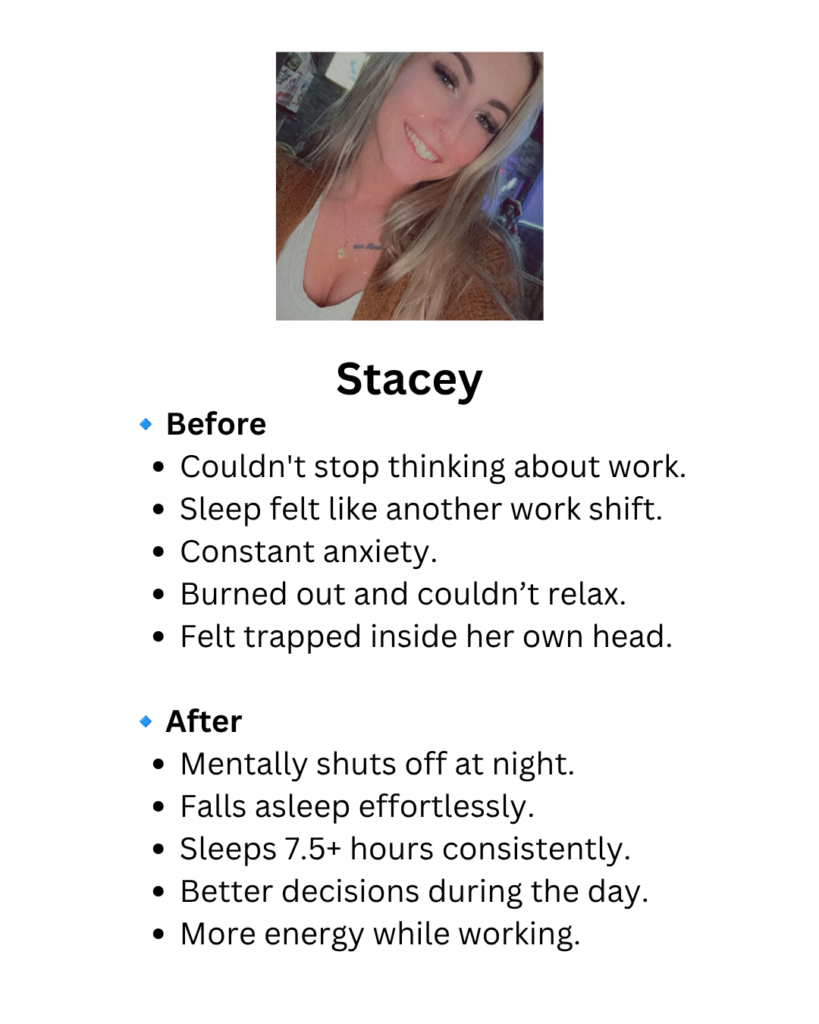
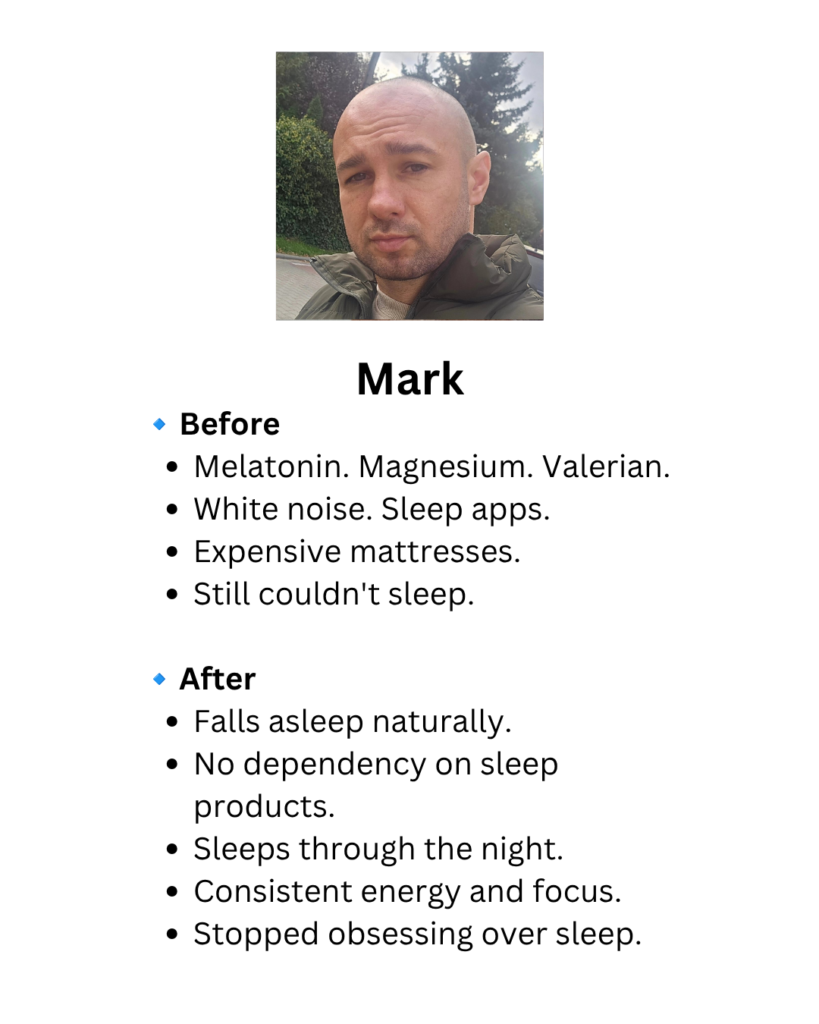
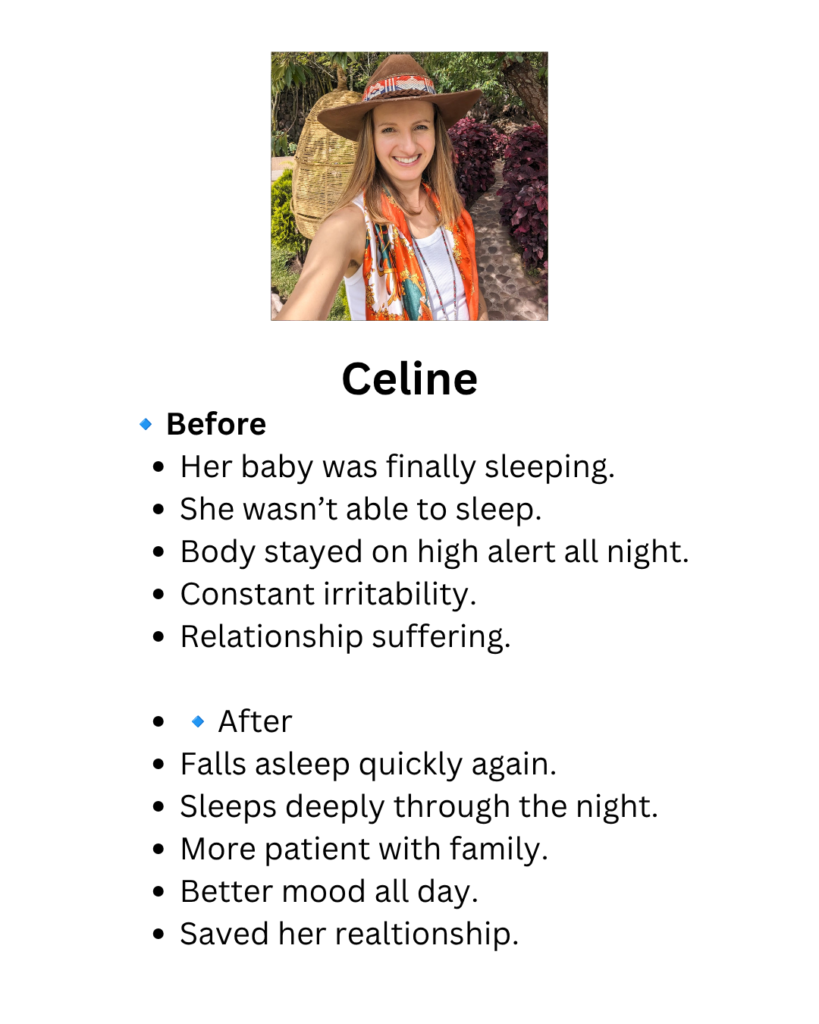
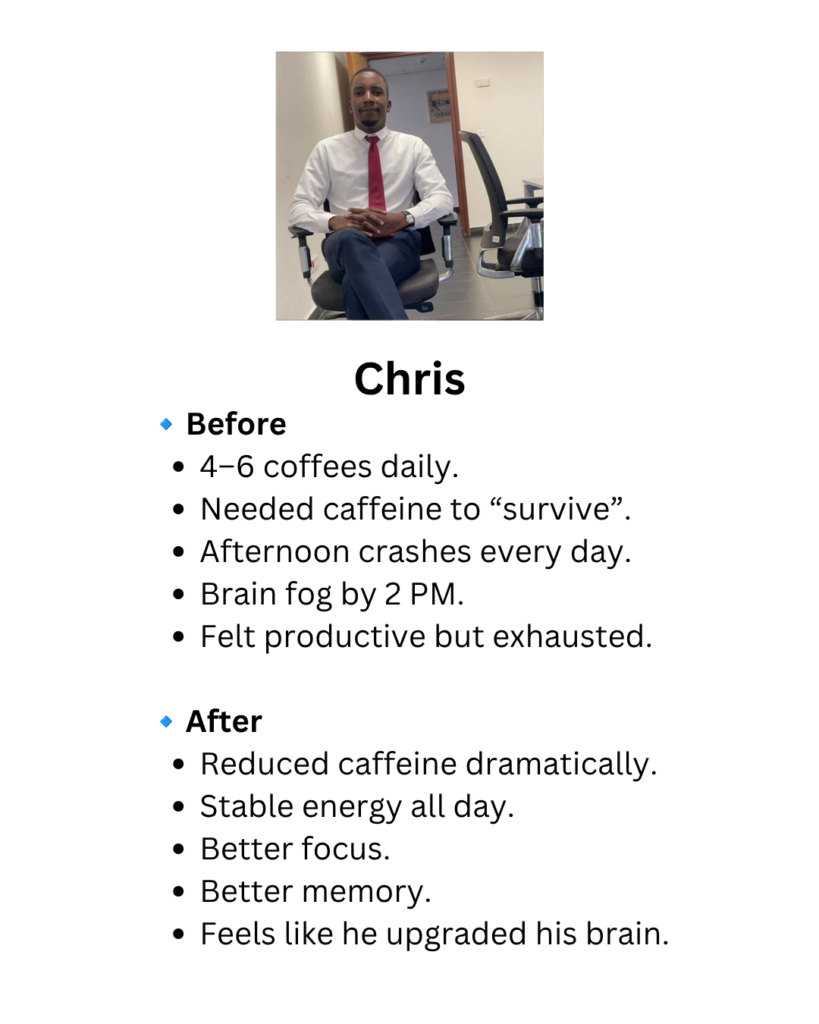
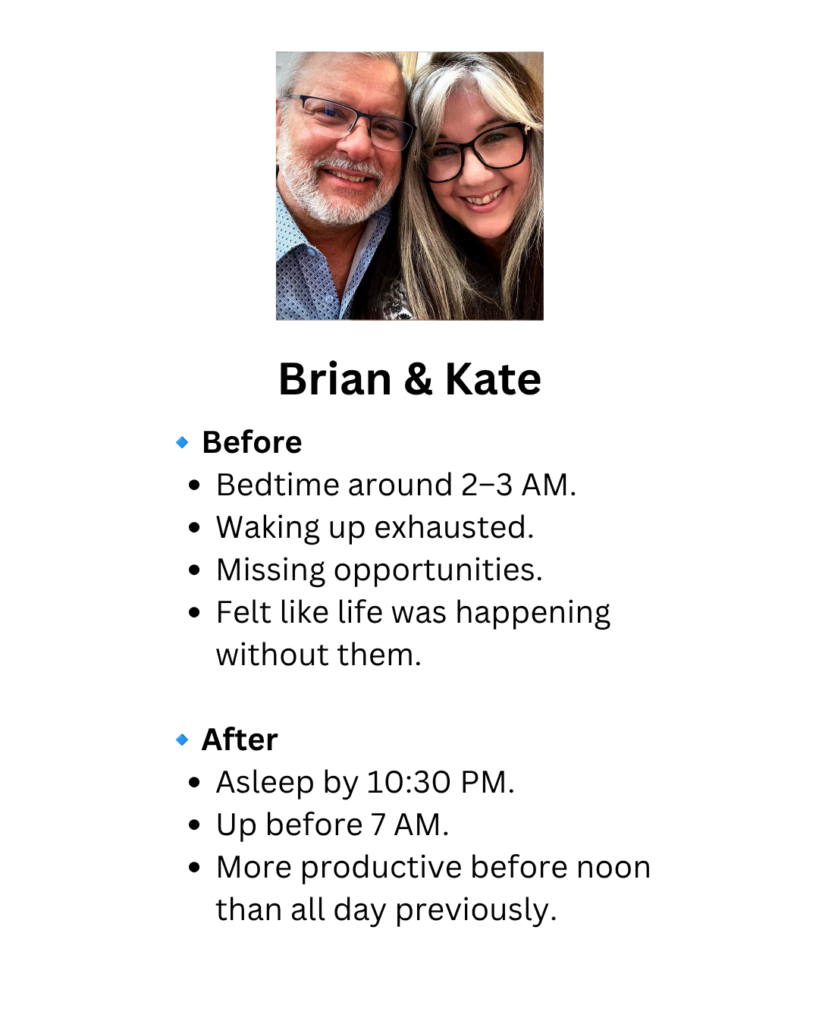
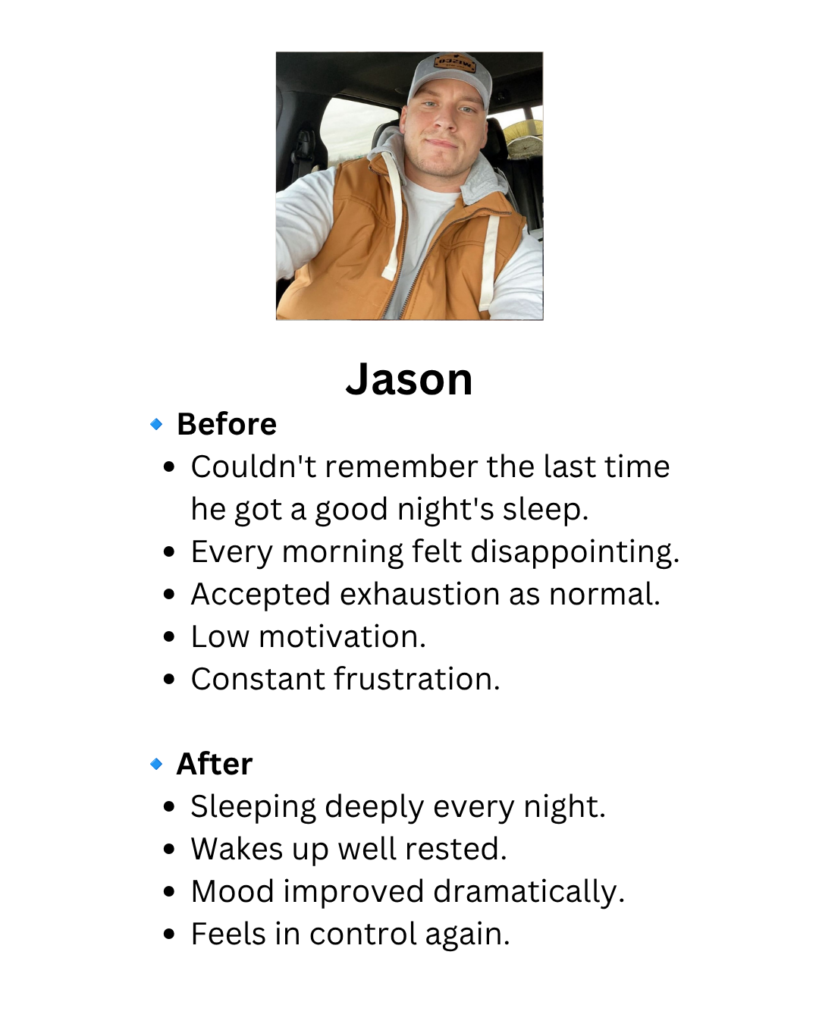
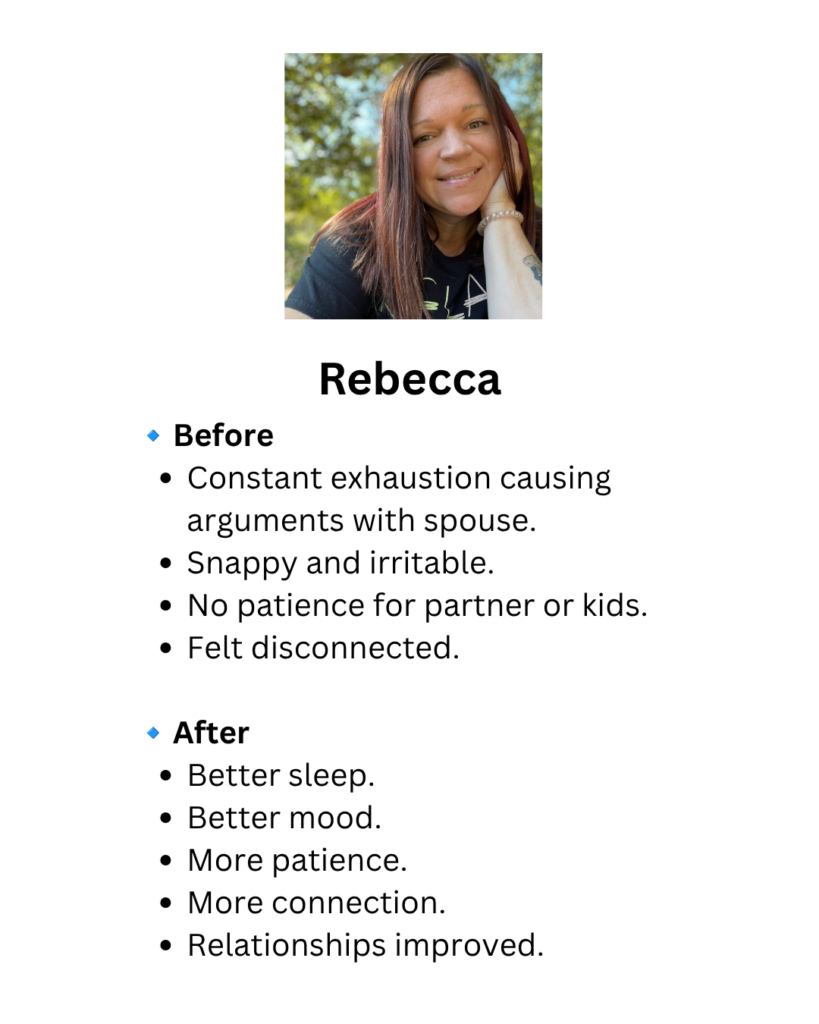
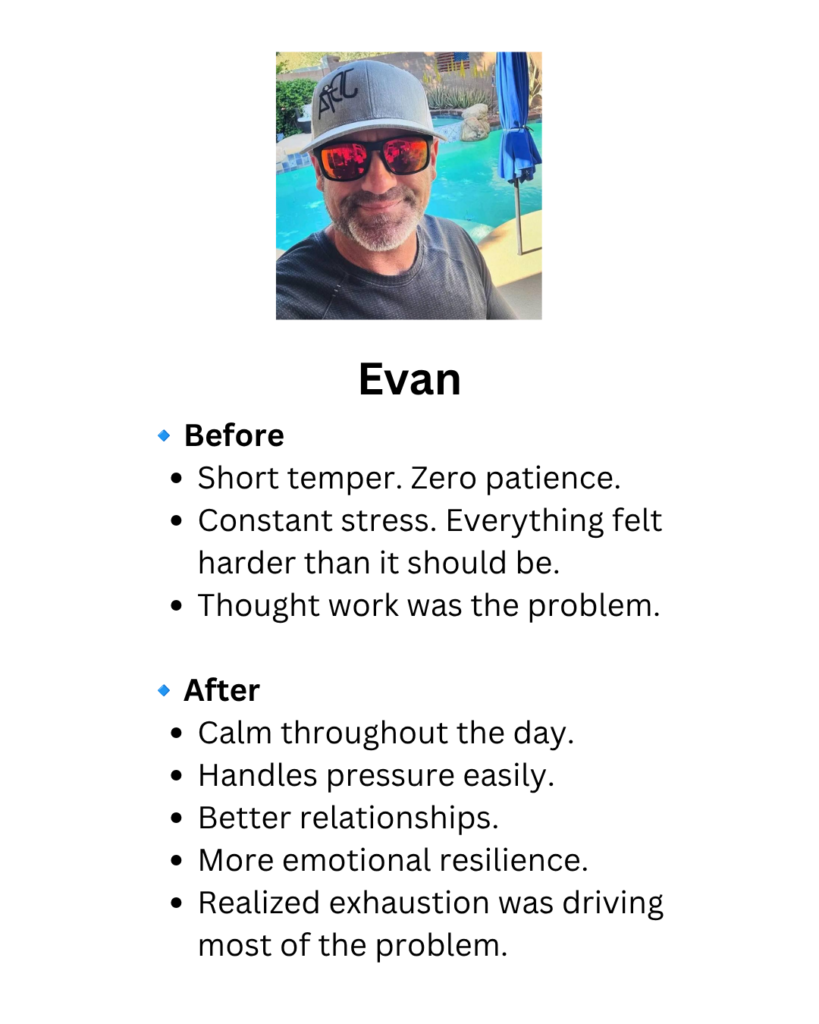
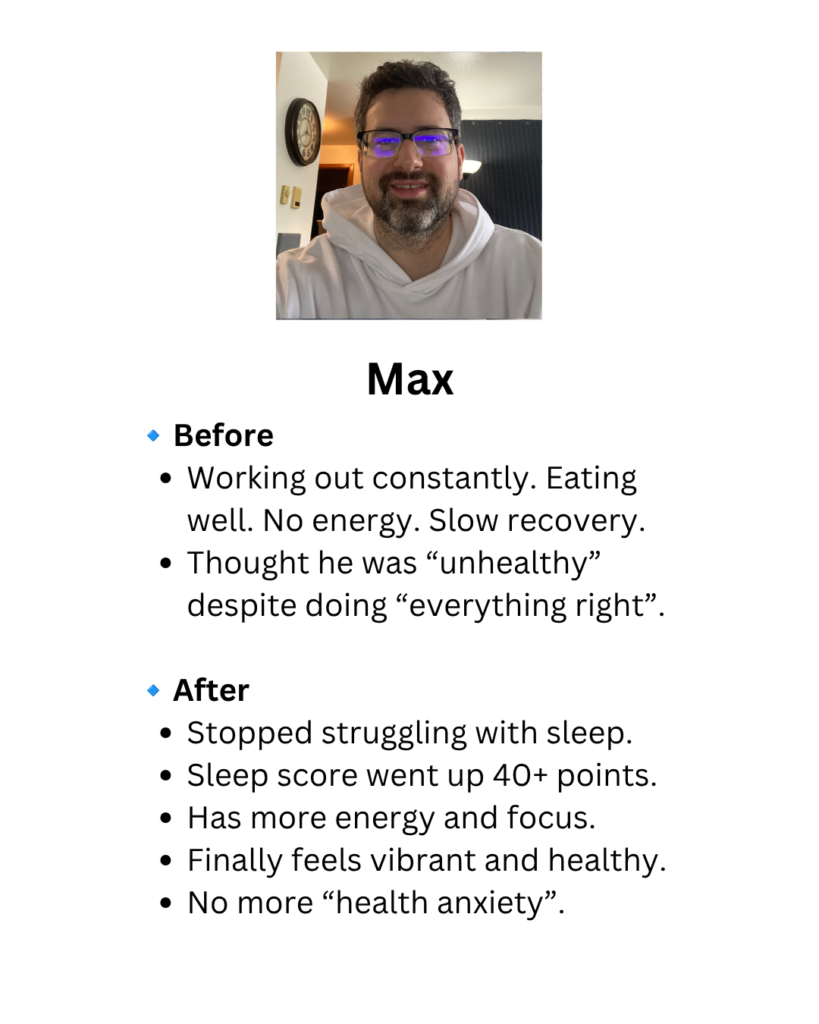
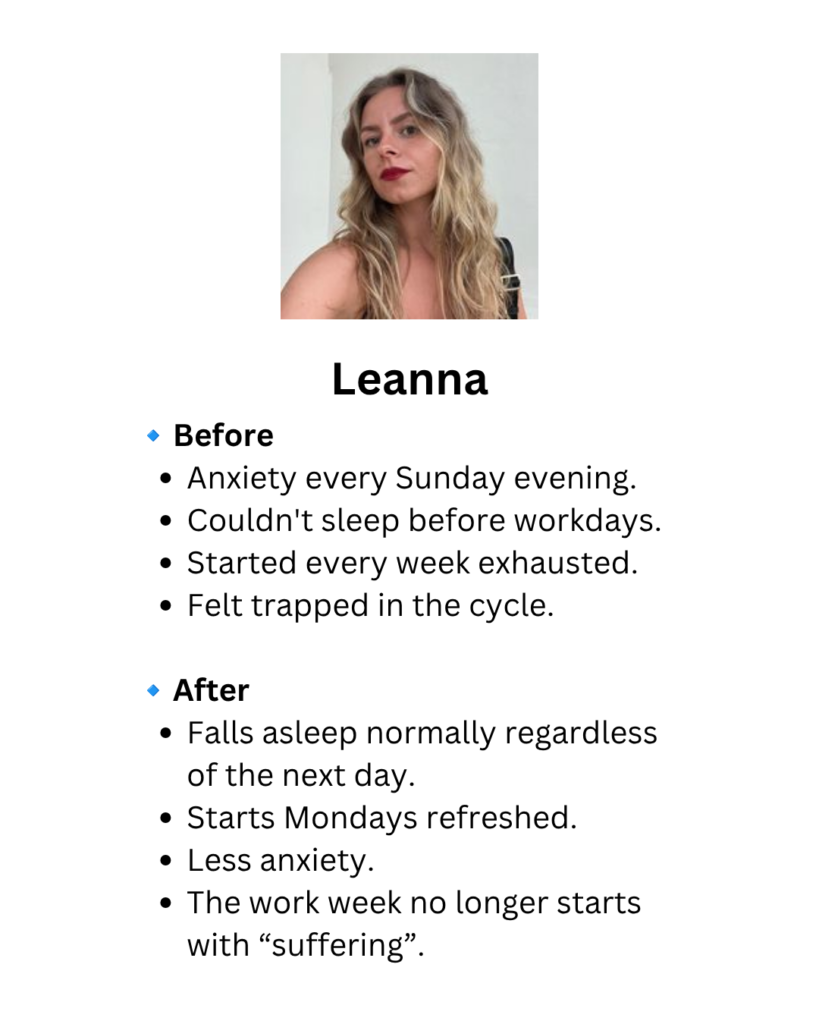
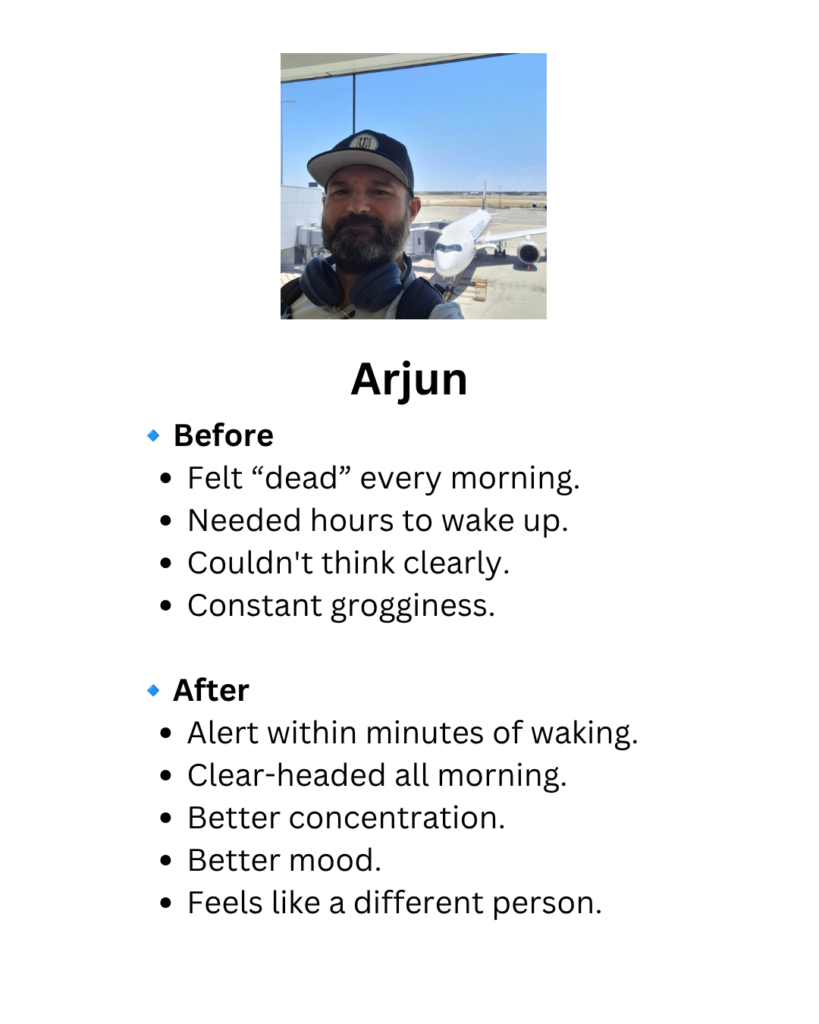
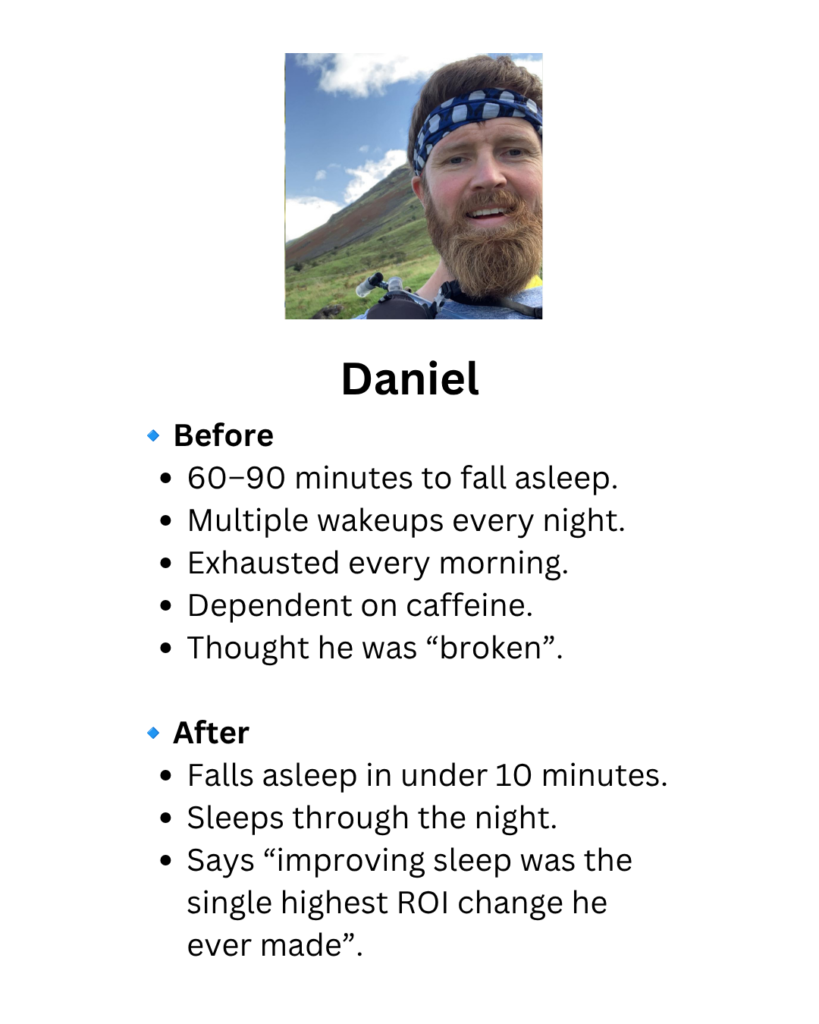
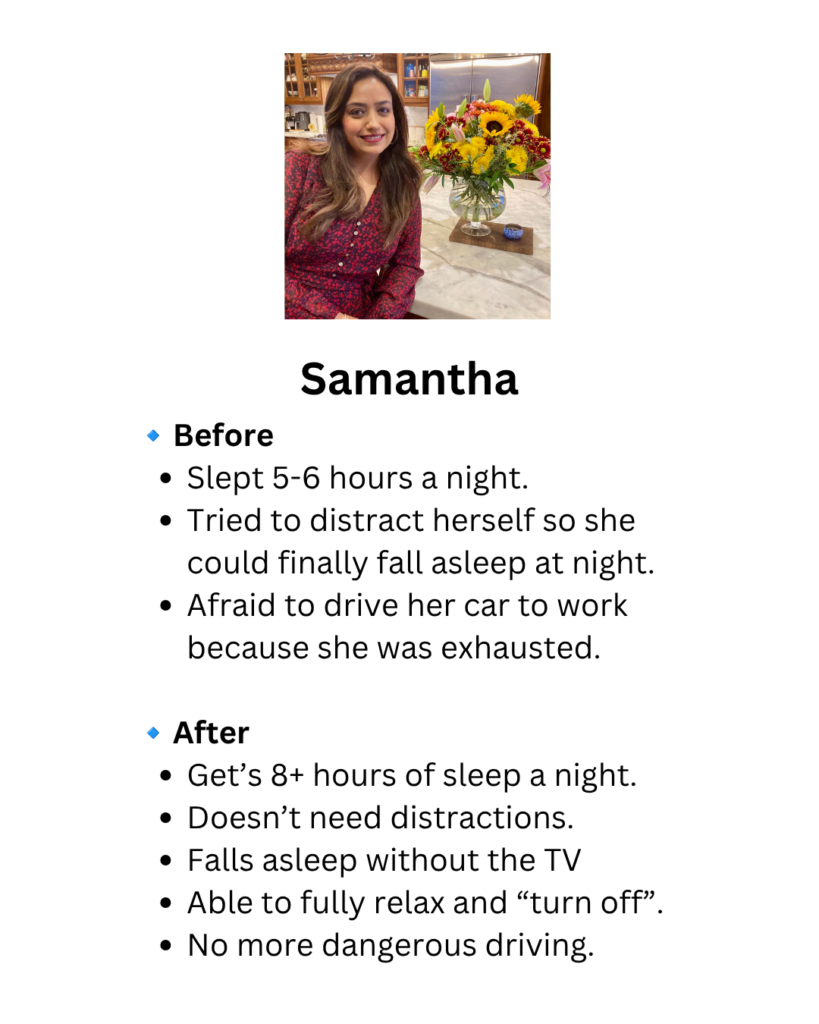
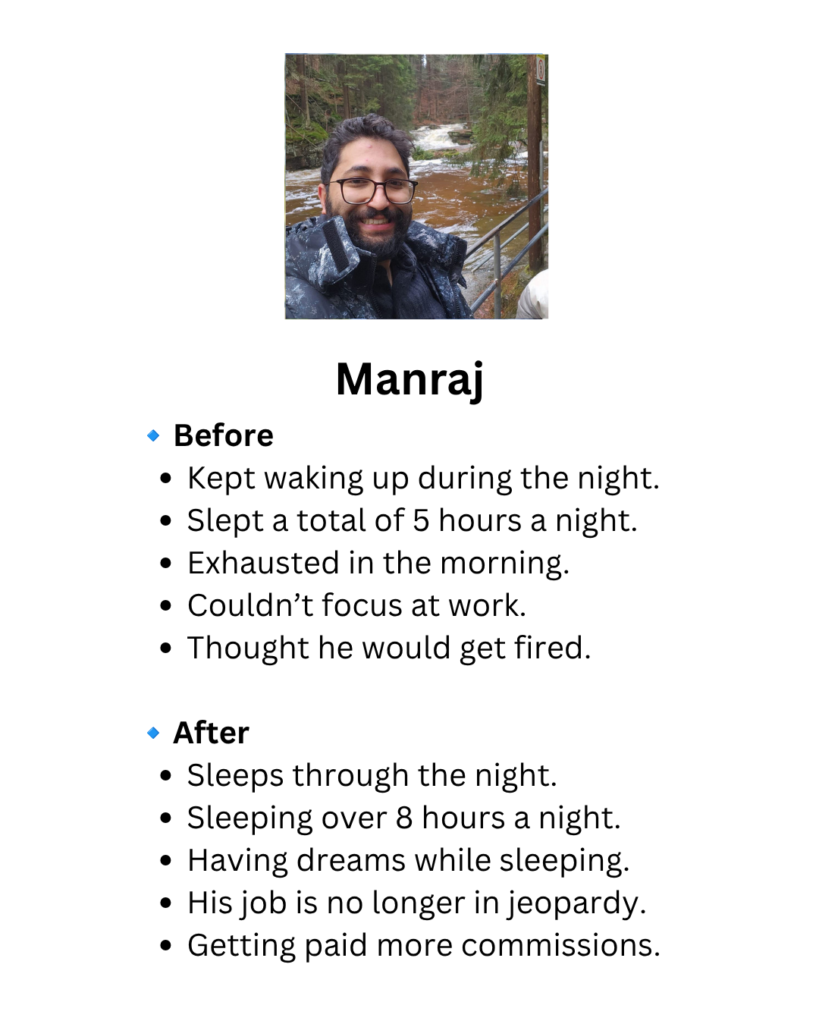
6. Learn more about us! Check out the FAQ’s and Case Studies below.
This is not a sales call, this is a free consultation.
During this free consultation, we’ll uncover what’s really disrupting your sleep, why nothing you’ve tried has fully worked, and what needs to change to finally start sleeping deeply again.
You’ll walk away with clarity, actionable next steps, and a personalized game plan based on your situation.
And if we believe we can help you get faster, lasting results, we’ll show you exactly what working together would look like.
If it’s not the right fit, no pressure — we’ll still point you in the right direction so you can stop struggling and start getting the rest you deserve.
Many competitors attempt to copy us because what we do works.
The Insomnia Shield™ is not generic sleep advice, a checklist from Google, or information pulled from YouTube videos. It’s a proprietary system we developed through real-world experience working directly with people struggling with insomnia.
This process is exclusive to our company and cannot be found anywhere else.
We are the originators of the Insomnia Shield™, and our business, branding, and methodology are built around this framework.
We’ve dedicated our work to understanding sleep at a very deep level — and the results speak for themselves. That’s why our approach continues to stand apart in an industry filled with one-size-fits-all solutions.
The Insomnia Shield™ is our proprietary process designed to attack insomnia from multiple angles simultaneously.
Through years of working with clients, we’ve found that sleep issues almost always fall into three core categories:
-Psychology
-Biology
-Neurology
Psychology
Psychological factors are one of the most common reasons people struggle to sleep.
This is when your mind won’t slow down. You may be dealing with chronic stress, financial pressure, relationship problems, grief, anxiety about sleep itself, depression, PTSD, or simply feeling overwhelmed by life. For some people, it’s racing thoughts. For others, it’s hypervigilance, worry, or feeling mentally “stuck on.”
When the brain perceives stress or danger, it becomes extremely difficult for the brain to fully relax into sleep.
Biology
Biological factors involve physical issues happening inside the body that interfere with sleep quality.
This can include chronic pain, inflammation, hormone fluctuations, headaches, congestion, post-nasal drip, breathing issues, temperature dysregulation, illness, medication side effects, caffeine sensitivity, digestive problems, or elevated stress hormones.
Sometimes the body itself is creating an environment where deep, restorative sleep becomes difficult — even when someone feels mentally exhausted.
Neurology
Neurology refers to how the brain and nervous system regulate sleep.
This includes circadian rhythm, sleep drive, nervous system arousal, and overall brain chemistry. In many cases, people aren’t dealing with obvious stress or physical discomfort, yet their brain still struggles to transition into a proper sleep state.
This is where we begin examining the neurological side of sleep dysfunction.
Your way of doing things doesn’t work.
Because if it did, you probably wouldn’t be here right now looking for answers.
In fact, most people are relying on outdated sleep tactics and that’s actually what’s keeping people stuck.
The more you obsess over sleep, the harder you try to force it, and the more rituals and “sleep hacks” you pile on, the worse the cycle usually gets.
The truth is, it’s actually rare for human beings to have trouble sleeping naturally.
Most people are sitting six inches away from a big screen TV, scrolling on their phones, drinking coffee, dealing with stress, and they still fall asleep on time, sleep through the night, and wake up feeling rested.
-They’re not doing relaxation exercises every night.
They’re not relying on sleeping pills.
-They’re not obsessed with sleep hygiene.
-They don’t have some perfect bedtime routine.
-They just sleep.
So if all of these conventional sleep strategies were truly necessary, then why are millions of people sleeping perfectly fine without doing any of them?
That’s the question nobody asks.
The reality is, insomnia is usually not caused by “bad sleep habits.” It’s caused by deeper psychological, biological, and neurological factors that are disrupting the brain and body’s natural ability to sleep.
And until those root causes are properly addressed, most people stay stuck going in circles — trying more supplements, more routines, more techniques, and getting more frustrated when nothing changes.
That’s why our process is different.
We don’t just throw generic sleep advice at people and hope something works. We identify what’s actually driving the insomnia underneath the surface and address it directly.
Because sleep is supposed to be natural.
The goal isn’t to teach you how to “perform” sleep every night.
The goal is to get you back to the point where sleep happens automatically again.
People try all the sleep strategies, they don’t work, and eventually it starts to feel like they’re out of options.
That’s usually when they turn to chemicals and do their best to ignore the side effects.
Maybe they drink alcohol or use marijuana to help them fall asleep. Maybe they try “natural” fixes like chamomile or valerian tea.
When that doesn’t hold up, they move on to melatonin, Benadryl, or whatever else is sitting on the drugstore shelf.
If that works for a while, it usually fades — tolerance builds — and then it escalates to prescription sleeping pills.
And yes, we can set aside the obvious concerns for a moment — side effects, tolerance, dependence, withdrawal — because most people already understand that part.
Here’s the more important, and often overlooked, truth:
1.None of these substances actually create real sleep.
2.They may knock you out, but being knocked out is not the same thing as sleeping.
Here’s The Neuroscience:
1. Sleep is not a passive blackout state. It’s a complex, active biological process that the brain has to generate on its own.
2. During healthy sleep, your brain cycles through REM sleep and deep NREM sleep in a very specific pattern.
3. REM sleep is essential for emotional processing, memory consolidation, and cognitive integration.
4. Deep NREM sleep is essential for physical restoration, immune function, and cellular repair.
5. Real sleep is structured, rhythmic, and highly organized — your brain moves through these stages in repeating cycles throughout the night.
Here’s The Sinister Truth:
When you rely on alcohol, marijuana, or sleep medications, that architecture gets disrupted.
The brain may become unconscious, but it doesn’t move through those natural sleep stages in the same way. Brain activity patterns shift. Sleep architecture becomes flattened, fragmented, or suppressed.
And this is a big reason people often wake up feeling groggy, unrested, or “off” even after a full night of being knocked out.
In Summation:
You can experiment with various chemicals and be rendered unconscious without actually getting restorative sleep.
That difference matters more than most people realize — because the goal isn’t just to lose awareness for eight hours.
The goal is to get real, biologically complete sleep that actually restores the mind and body.
That’s exactly what we aim to do for our clients.
Yes. Lack of sleep can absolutely be lethal.
Sleep deprivation has been used as a form of torture because prolonged sleep loss causes severe psychological and physical distress, including hallucinations, impaired cognition, emotional instability, and physiological dysfunction.
The same principle applies to chronic sleep problems.
Sleep deprivation and poor-quality sleep are associated with increased risks of cardiovascular disease, metabolic disorders, weakened immune function, depression, accidents, and premature death.
Research has found that even the time you fall asleep can influence your health.
One study reported that individuals who regularly fell asleep outside the 10 p.m. to 11 p.m. window had a significantly higher risk of cardiovascular disease and mortality up to 30%!
A lack of high-quality, consistent sleep is detrimental to nearly every aspect of health.
It impairs emotional regulation, cognitive performance, memory consolidation, physical recovery, hormonal balance, and immune system function.
Sleep is one of the body’s primary mechanisms for repair and recovery.
Without it, both mental and physical health progressively deteriorate.
The average life expectancy in America is around 76 years old.
That means by the age of 38, you’ve already lived half of your life.
A lack of high-quality, consistent sleep has already stolen months or even years from your life.
Not just in terms of longevity, but in lost energy, lost opportunities, lost productivity, lost experiences, and lost time spent feeling your best.
Sleep affects every aspect of your life. It influences your mood, focus, decision-making, performance, physical health, emotional well-being, and your ability to show up as your best self every day.
You can’t change the sleep you’ve lost in the past.
But you can decide that the final half of your life will be lived with more energy, better health, greater purpose, and a higher quality of life than the first.
The best time to fix your sleep was years ago.
The next best time is now.
The real question is: why wouldn’t you?
There is no shortage of money, especially in the United States.
Everywhere you look, there are billions and trillions of dollars.
The roads you drive on every day cost millions of dollars to build and maintain. The bridges you cross are worth tens or hundreds of millions. The buildings in your town represent billions of dollars of combined value. The power lines above your head, the water systems beneath your feet, the cell towers, hospitals, schools, airports, and businesses around you are all part of an infrastructure network worth trillions of dollars.
Money is everywhere.
Money is constantly being created, earned, spent, invested, and transferred.
But time is different.
You can always make more money.
You cannot make more time.
And when you’re gone, you can’t take a single dollar with you.
Money is a tool. Nothing more.
In fact, money is just a useless piece of paper until it’s spent. A $100 bill cost pennies to print.
Money only has value once you spend it.
It’s meant to be used to improve your life.
Besides, you’re going to end up spending your money on something.
The average Starbucks customer spends $14,000 over their lifetime on coffee.
The truth is, chances are high that you’re going to waste you money some place else. We all do.
It would be much wiser to take some of that money and invest it into your sleep.
So when you ask whether you should invest in your sleep, consider what you’re actually investing in.
You’re investing in:
-More focus.
-More energy.
-More productivity.
-Better decision-making.
-Better emotional regulation.
-Better physical recovery.
-Better mental health.
-Better relationships.
-A higher quality of life.
Sleep is one of the highest ROI investments you can make because it impacts literally everything else you do.
Imagine waking up every day with more focus, energy, motivation, and vibrance.
Imagine thinking more clearly, performing better at work, having more patience with your family, recovering faster from exercise, and having the energy to pursue the things that matter most to you.
Do you really think that won’t translate into more money over time?
Do you really think that won’t create more opportunities?
Do you really think that won’t improve your overall quality of life?
The cost of fixing your sleep is temporary.
The benefits can compound for years.
We get it.
You’ve probably tried everything.
Maybe some of those things helped temporarily.
Maybe none of them helped at all (common).
So it’s natural to wonder:
“What if I don’t get results?”
Take courage in the fact that our program includes an insurance policy.
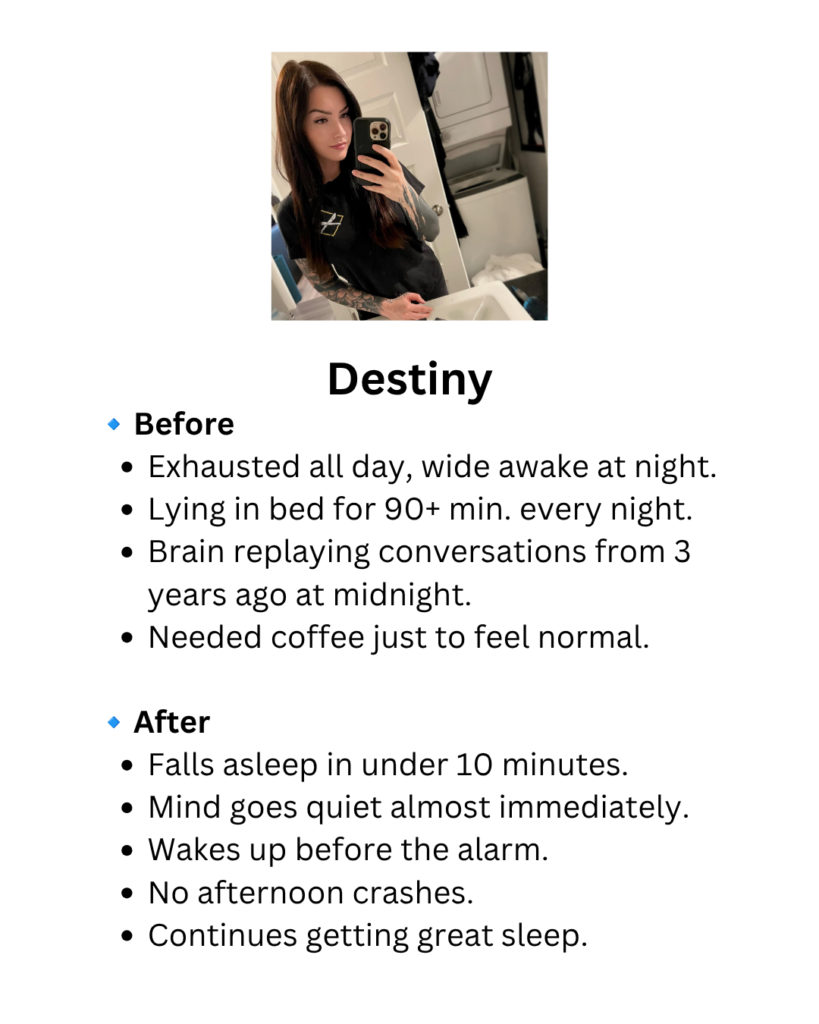
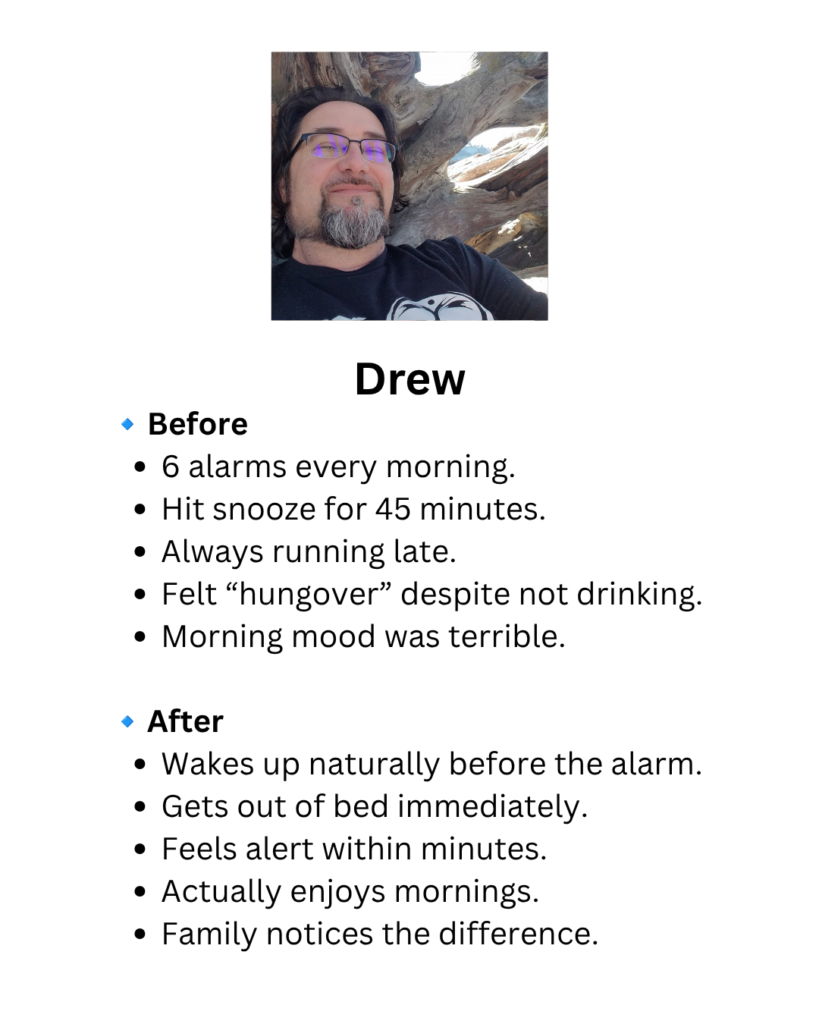
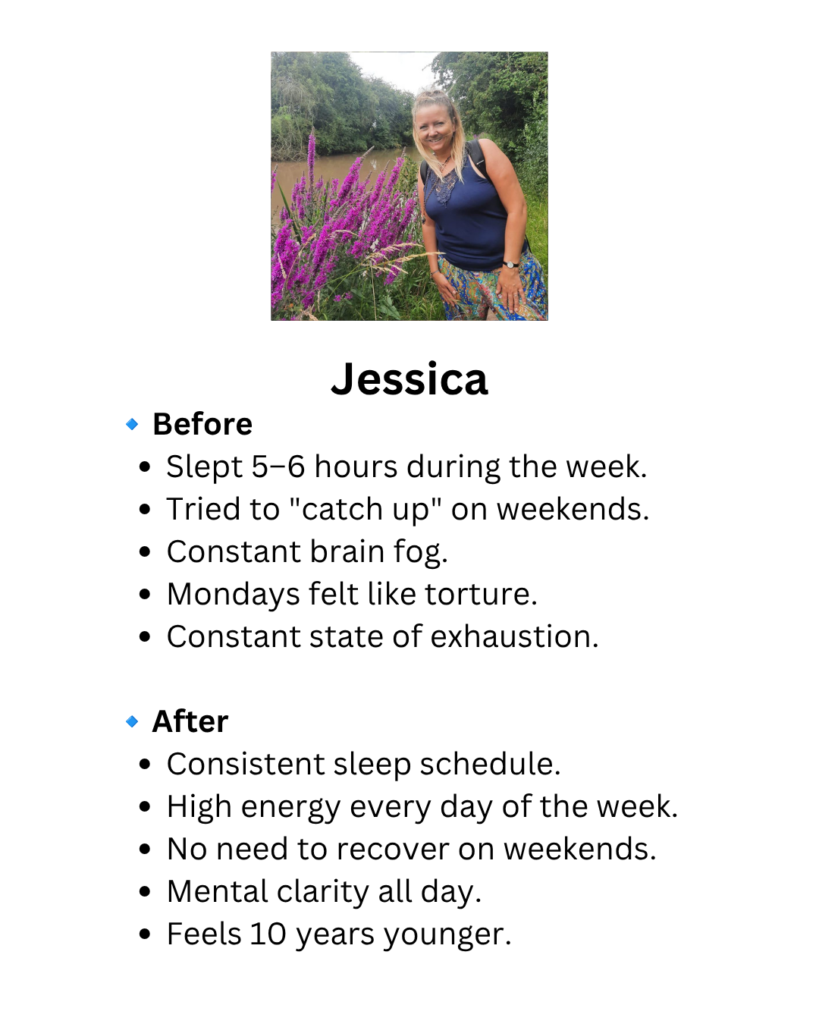
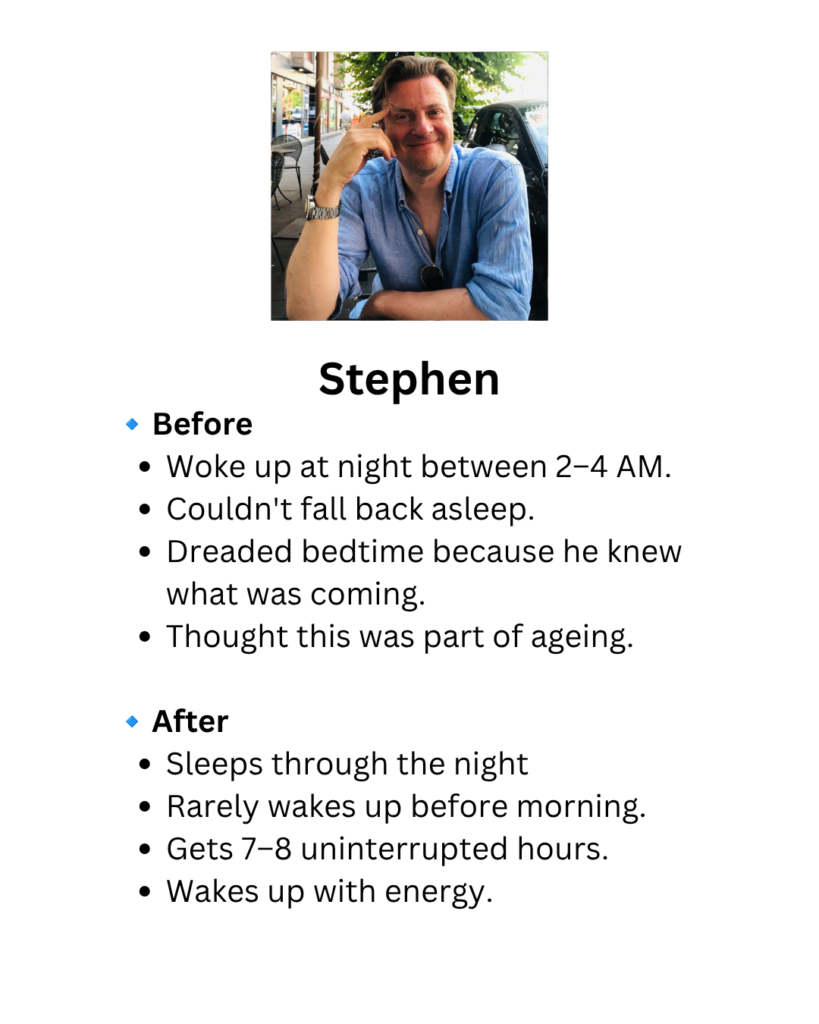
We’ve helped over 890+ people fix their sleep.
At this point we’re battle tested and we’ve seen pretty much everything.
We’re confident in our process, but we don’t want you taking on all of the risk.
We believe that if you’re willing to invest your time, money, effort, and commitment into improving your sleep, then we should be willing to stand behind our program Insomnia Shield™.
If by the end of working together your sleep hasn’t improved, we’ll continue working with you 100% FREE until your sleep improves.
We’re not afraid of a little bit of extra work and we aren’t going to abandon you.
Full terms and conditions about our insurance policy can be reviewed in writing during your scheduled call.
Yes. We offer financing options for qualified clients.
Many of our clients prefer to spread the investment out over time rather than paying the full amount upfront. Financing can make it easier to get started now instead of saving up money for extended ammounts of time.
During your consultation, we’ll review all available payment options and explain exactly what financing looks like, including any applicable terms and monthly payment amounts.
We have in house payments plans and out of house financing companies we’ve partnered with.
Our goal is to make getting help for your sleep as accessible as possible while helping you find a payment option that fits your budget and circumstances.
If financing is something you’re interested in, simply let us know during your consultation phone call and we’ll walk you through the available options.
When you scheduled your consultation, we shared that the investment to begin working together starts at $1,750, and that’s exactly what you can expect. We believe in being transparent about pricing from the start so there are no surprises.
We also offer financing options for qualified clients, making it possible to spread the investment over time rather than paying the full amount upfront.
We understand that deciding to invest in your sleep is an important decision.
During your consultation, we’ll walk you through all of your options, answer any questions you have, and help you determine whether our program is the right fit for your situation—without pressure or obligation.
Of course you should think about it—but be honest about what that actually looks like in real life.
This isn’t a decision you’re going to sit with in a rocking chair, light a pipe, swirl a glass of cognac, and slowly reflect on for months.
That version of “thinking it over” sounds nice, but it rarely happens.
What usually happens is simpler: this has already been on your mind. You’ve circled it, weighed it, delayed it, revisited it. And through all of that, time keeps moving.
So the real question isn’t, “Do I need more time to think?”
It’s, “Do I have enough clarity to make a yes or no decision?”
Because most people don’t need more time—they need better information.
That’s exactly what this page is for.
Everything you need is already laid out here. Your job now isn’t to overthink it—it’s to go through it properly, actually absorb it, and come to the call prepared.
Then on the call, don’t hold back. Ask every question you’ve got. Get real clarity on what you need. And once you have that clarity, you won’t be guessing anymore—you’ll be in a position to move.
After that, the responsibility shifts. Once you have the information, the job is no longer consumption—it’s action.
Because, information is not transformation.
We actually encourage it.
Before your call, we recommend reviewing all of the information on this page with your spouse in detail so they understand the program, the approach we use, and what you’re hoping to accomplish. The more informed both of you are, the easier it is to make a confident decision together. It’d even be a good idea to share the link to this page with them. Give them all the information up front.
In our experience, spouses are often less concerned about the day-to-day details of the program and more interested in understanding the investment and whether it makes sense for your family. For that reason, we recommend discussing the financial commitment upfront. The investment to begin working together starts as low as $1,750.
Here’s a simple example of how that conversation might go:
You: “I’ve been struggling with my sleep for a long time, and it’s affecting my energy, mood, health, and quality of life. I’ve found a coaching program that specializes in helping people like me.”
Spouse: “How much does it cost?”
You: “The investment starts at $1,750 to begin working together. They also have financing options available if we decide it’s something I want to do.”
The goal isn’t to convince your spouse—it’s to make sure they understand what you’re considering and why it’s important to you.
Having that conversation before your call usually leads to a much smoother decision-making process afterward.
Your spouse probably doesn’t want you to stay stuck, so you just should be upfront about everything.
By using our website, you agree to our Privacy Policy. Individual results may vary. Nothing on this site should be considered medical or professional advice. Past client results do not guarantee future outcomes. 2026 © Insomnia Shield LLC.